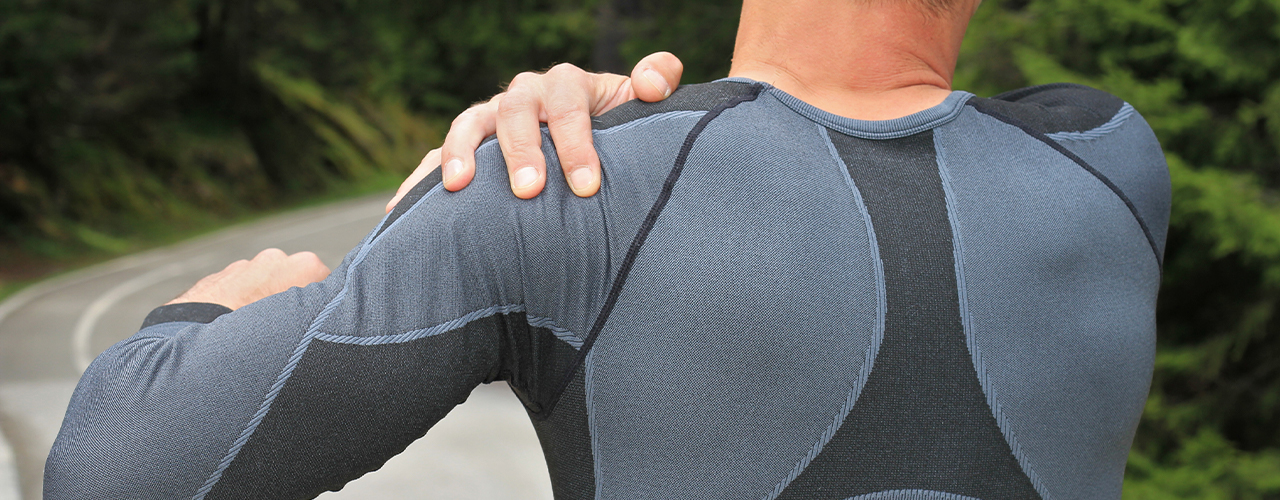
Nagging Shoulder Pain Holding You Back?
Don’t let shoulder pain ruin your day — physical therapy and occupational therapy can help
We use our shoulders for almost every movement we make, so if they’re bothering us, it’s a big deal! There are numerous reasons why someone may experience shoulder pain, and the severity can range from the temporary discomfort of a pulled muscle to the agonizing bone-on-bone friction of arthritis.
Sometimes you just can’t get through a day without feeling a dull aching pain in your shoulder and neck. It can show up as a result of an injury, making you feel as if your shoulder is immobile.
Shoulder pain can take many forms – it can rear its ugly head when you’re reaching toward the top shelf to put dishes away or when you’re struggling to find a comfortable position to sleep in.
Whatever may be the cause of your shoulder pain, Prairie Rehabilitation is dedicated to offering you natural pain management modalities. Request an appointment at one of our clinics in Worthington Avera, Worthington Oxford, Jackson, Tea, Hartford, Harrisburg, Brandon, Sioux Falls, East Sioux Falls, West Sioux Falls or Central Sioux Falls today to learn more about our various treatment methods for shoulder pain.
Common reasons for shoulder pain
Some of the most common causes of shoulder pain include:
Tendinitis
Tendinitis occurs when the shoulder joint is excessively overused typically due to the physical demands of a person’s job, overhead activity, or sport. Another factor for tendinitis is also poor posture because this alters the normal forces on the tendons, and can set you up for tendon injury. This causes the tendons to undergo ongoing inflammation, resulting in swelling and painful impingement when raising your arm.
Bursitis
Bursitis is the inflammation of a bursa (a fluid-filled sac) that cushions the bone, muscles, and tendons. When friction from neighboring tendons causes irritation to the bursa, this causes inflammation, causing pain when raising your arm overhead.
Frozen shoulder
Frozen shoulder results in a painful loss of motion in the shoulder with a tightening of the shoulder joint that severely limits motion. It is also known as “adhesive capsulitis.”
This condition can occur after an injury or strain of the shoulder, if your arm has been in a cast or sling for an extended period, or if you have been bedridden for a longer timeframe. When you don’t have opportunities to exercise the shoulder, the tissues can stiffen up on you, thus causing this painful condition to occur.
Some ethnicities are more predisposed, and women from 40-60 years of age tend to have more instances of this condition than men. Certain medical conditions can increase the incidence of frozen shoulder, such as diabetes and thyroid disease.
Impingement
Impingement typically occurs because of abnormal movement and tracking of the humeral head as you lift your arm overhead. Pain typically occurs when lifting your arm at or above 90 degrees.
Arthritis
The two main forms of arthritis that affect the shoulder are osteoarthritis and rheumatoid arthritis. Both of these result in loss of motion, weakness to the shoulder muscles, and difficulty performing normal, daily tasks.
Rheumatoid arthritis occurs when the immune system decides to attack the membranes surrounding the shoulder joint, resulting in pain and inflammation.Rotator cuff tear
Osteoarthritis occurs when the cartilage in the shoulder joint experiences significant “wear and tear,” typically due to age or excessive overuse.
Rotator Cuff Tear
The rotator cuff is a group of muscles surrounding the shoulder. They are made up of the supraspinatus, infraspinatus, subscapularis, and teres minor muscles. While these muscles are small and individually not that powerful, they play a critical role in how the shoulder moves. Without your rotator cuff, you would not be able to lift your arm very far from your side. The job of the rotator cuff is to guide the humerus head and slide it down within the socket (glenoid) so that it clears the bony shelf above the socket called the acromion. When the rotator cuff is weak, the head of the humerus rides up rubbing against the acromion above it.
The rotator cuff takes a lot of abuse over a lifetime and tearing is very common as we age. Many factors can lead to early injury of the rotator cuff including sport injuries, falls onto the shoulder or arm, repetitive lifting or movements, or poor posture.
Rotator cuff tears can be minor, causing pain and inflammation, or major which can require surgery. With surgery, depending on a variety of factors such as the quality of the tissue, the extent of the tear and other health factors, the recovery can take between 3-6 months. Physical therapy and Occupational therapy are a very important part of conservative management, preparation for surgery, and rehabilitation.
Surgery vs physical therapy
Those who experience rotator cuff injuries or “torn shoulders” generally report a dull ache deep in their shoulder, arm weakness, difficulty reaching behind their backs, and disturbed sleep due to pain.
Depending on the severity and situation, sometimes surgery is needed, but often the correct physical therapy treatments can help reduce pain and restore strength to the rotator cuff to compensate for a partial tear. If surgery is needed, physical therapy or Occupational therapy are an integral part of the rehabilitation to a full recovery.
According to the American Physical Therapy Association, “A recent study from Finland asserts that when it comes to the treatment of nontraumatic rotator cuff tears, physical therapy alone produces results equal to those produced by arthroscopic surgery and open surgical repair.”
At Prairie Rehabilitation, our natural and non-invasive methods can help relieve and manage your shoulder pain by designing the best individualized treatment plan for your needs. In fact many of our patients report improvement and relief in a few short treatment sessions.
Why are our shoulders so important?
The shoulder is a “ball-and-socket” joint, meaning the head of the upper arm bone, or “humerus,” fits perfectly in the corresponding space within the shoulder blade or “scapula.” The ends of the bone are protected by a thick layer of cartilage, protecting the bones from rubbing together.
Fluid-filled sacs called “bursae” also protect the tendons from rubbing against the bones. Tendons attach the bones in the shoulder to a set of bones, known as the rotator cuff.
Your shoulders are capable of accomplishing tons of physical feats. The shoulders have the greatest range of motion of all the joints in your body! However, with its complexities also comes the possibilities of pain and discomfort.
The type of pain you feel in your shoulder can vary, depending on what is causing it. Pain from impingement, for example, typically occurs as you raise your arm up, and begins at a certain point in the range of motion.
Pain resulting from a degenerated shoulder may create persistent aches every time you move your arm in certain directions. Acute injuries can result in sudden and intense pains that make it impossible for you to move your shoulder at all.If something goes wrong with the intricacies that make up the mechanical interplay of the shoulder, pain can be the unfortunate result.

What is physical therapy treatment for shoulder pain like?
Physical therapy is a natural, easy, and comfortable way to find relief for shoulder pain, without the need for harmful drugs or invasive surgery. Our physical therapists and occupational therapists in Worthington Avera, Worthington Oxford, Jackson, Tea, Hartford, Harrisburg, Brandon, Sioux Falls, East Sioux Falls, West Sioux Falls and Central Sioux Falls have treated a number of conditions resulting in shoulder pain, with patients finding improvement and relief after just a few short sessions.
Physical therapists and occupational therapists are movement experts who are trained to pinpoint the cause of your pain through a variety of diagnostic tests and methods.
During your evaluation, we will examine your range of motion, strength, coordination, medical history, joint mobility, and mechanics of your joint motion.
After your physical therapist or occupational therapist has established the cause of your shoulder pain, they can create a specialized combination of therapy methods to manage and relieve your pain.
Your treatment plan may involve gentle manual therapy, which helps to restore normal joint movement, ease soft tissue restrictions, and promote circulation. It could also include specific therapeutic exercises to restore strength and the correct sequence of muscle activation around the shoulder joint.
Another benefit of physical therapy is that you’ll learn new ways to move your body to enhance your strength and to prevent the recurrence of future shoulder problems.
See What Our Patients Are Saying About Our Prairie Rehabilitation Clinics
Say goodbye to shoulder pain once and for all
Shoulder pain may be controlling your life, but it doesn’t have to! Our South Dakota and Minnesota physical therapy practice locations will get you the help you need to start doing the things you love once again without pain.
Contact Prairie Rehabilitation today in Worthington Avera, Worthington Oxford, Jackson, Tea, Hartford, Harrisburg, Brandon, Sioux Falls, East Sioux Falls, West Sioux Falls or Central Sioux Falls to request your appointment and get started on your path toward pain relief.
Your Next Steps…
Request An Appointment
Receive A Custom Treatment Plan
Work Hard and Progress In Your Recovery
Recover & Enjoy Life Pain-Free!