


Why Your Ankle Pain Isn’t Going Away (Even After Rest)
After spraining your ankle, you immediately follow all the instructions for immediate care. You stay off the affected foot. You elevate your leg to help bring down swelling. You skip your regular workouts to give your ankle time to heal.
So why does it still hurt?
Lingering ankle pain is definitely frustrating. It can keep you on your couch and slow down your daily routine. Unfortunately, rest alone often isn’t enough to fully resolve the problem. In many cases, it can actually delay recovery and potentially increase your risk of additional ankle injuries in the future.
Today, the Prairie Rehabilitation team wants to break down why ankle pain happens—and explore what it really takes to feel better and move with confidence again.

Understanding Persistent Ankle Pain: What’s Really Going On?
Your ankle is a complex joint that relies on several bones, ligaments, tendons, and muscles working together to help you walk and run with ease. When something goes wrong in any of these areas, ankle pain can develop.
There are several reasons why ankle pain can develop, including ankle sprains, tendon irritation, muscle weakness, or poor movement patterns. Unfortunately, many of these issues don’t fully resolve with rest alone. So while it’s common for people to stop moving when they’re experiencing pain, that’s not always the best long-term solution.
Why Ankle Pain Sticks Around
Weakness Develops Quickly
After an injury, muscles around the ankle weaken within days. Less support leads to more strain on the joint.
Stiffness Limits Movement
Without regular motion, the joint becomes more restricted, which can affect walking, squatting, and balance.
Poor Healing of Ligaments and Tendons
Tissues need controlled loading–that is, gentle, progressive stress–to heal properly. Without it, they remain vulnerable.
Balance and Stability Decline
Ankle injuries often affect proprioception, the communication between your joint and your brain. This increases the risk of re-injury.
Why Exercise-Based Rehab Matters for Ankle Injuries
When it comes to ankle pain, progressive exercise is key to recovery. It addresses the root causes of lingering ankle pain, not just the symptoms, helping you to find long-term relief.
After an injury, the body often adapts in ways that reduce strain in the short term but create dysfunction over time. Guided movement helps restore normal patterns so the ankle can handle daily demands again. Furthermore, the gradual, controlled stress of targeted exercise promotes healing in your ankle’s ligaments and tendons. Without it, they remain weaker and more prone to irritation or re-injury.
Exercise-based rehab also helps recalibrate pain. Gradual exposure to movement can desensitize the nervous system, making activity feel safer and more manageable. This is especially important when pain has persisted beyond the initial injury.
Finally, structured progression ensures the ankle is prepared for real-life demands. Instead of asking you to avoid movement, rehab builds tolerance gradually, an approach that supports long-term recovery and reduces the risk of setbacks.
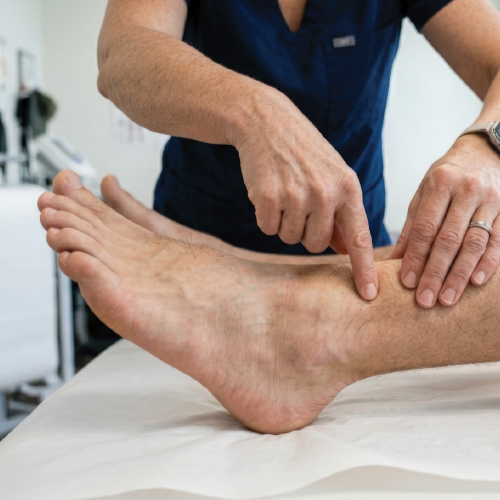
Finding Ankle Pain Relief at Prairie Rehabilitation
Our team understands the importance of personalized, guided movement for managing ankle pain. During your sessions, you work directly with the same therapist each visit to ensure consistent progress tracking and regular adjustments based on how your body responds to treatment.
Your first session will consist of a movement-focused evaluation in which your therapist will look beyond your ankle to assess strength, mobility, walking and movement patterns, and balance and coordination. This helps us identify the root cause of your pain so we can develop a care plan that meets your needs. This plan might include:
- Manual therapy techniques to improve your range of motion
- Modalities that help manage pain and promote recovery
- Neuromuscular treatments to support muscle activation
- Progressive exercise programs that restore strength, stability, and confidence in movement
- Balance and stability training to reduce re-injury risk
- A gradual return to activity to ensure your tissues safely adapt to load
Exercise of the Month
ANKLE ALPHABETS
Start by sitting up straight in a chair. Raise one leg out in front of you. Slowly write the letters of the alphabet with your foot, only moving at your ankle joint.
3 Sets, 10 Reps. (Materials needed: chair)
Take the Next Step Toward Lasting Relief
If your ankle pain hasn’t improved with rest, it’s a sign your body needs the right kind of movement. Rather than ignoring the issue, reach out to Prairie Rehabilitation for a focused rehab plan.
We’ll help guide you on a clear path forward so you can return to the activities you enjoy.

Great help with my issues! Everyone explains why they ask me to do the exercises and really listens to the feedback I give them. So a great partnership to get me active the way I want to be!