


Hip Pain Affecting Your Daily Activities? Here’s What to Know
Hip pain has a way of showing up at the most inopportune moments: getting up from a chair, going for a walk, or hitting the gym. For some, it starts gradually. For others, it feels like it came out of nowhere. Either way, it can quickly begin to limit the things you enjoy.
The good news is that hip pain is often manageable with physical therapy, and the team at Prairie Rehabilitation is here to help you return to the activities that matter most to you.
A Closer Look at Hip Pain
The hip connects the upper and lower body and is involved in nearly every major movement, including walking, bending, lifting, climbing stairs, and more. It often presents as a deep ache in the front, side, or back of the hip, but you might also experience:
- Stiffness after sitting or resting
- Discomfort during or after activity
- Pain that comes and goes depending on what you’re doing
As you might expect, hip sensitivity can have wide-ranging impacts, affecting everything from balance and stability to sleeping positions! However, it’s important to remember that these symptom variations are typical of hip pain. Moreover, they can provide helpful clues about how your hip is responding to current demands.
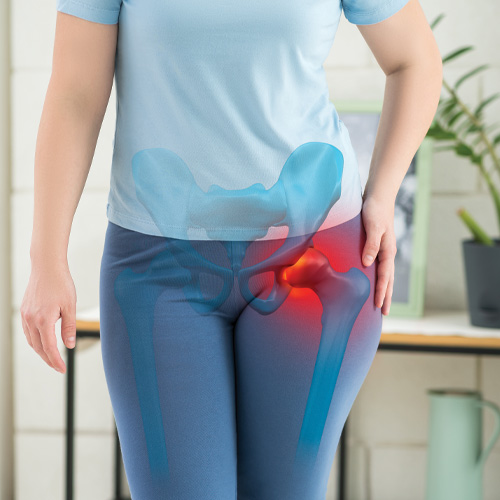
Why Does Hip Pain Develop?
Hip pain is rarely caused by a single factor. Instead, it’s usually influenced by a combination of elements that can vary from person to person, including:
- Changes in activity levels, such as starting a new workout routine
- Muscle strength and coordination
- General deconditioning
- Previous injuries
- Sustained positions throughout the day with little change in movement
- Overall workload on the body from exercise, work, or lifestyle factors, like sleep and stress levels
This is why it’s so important for hip pain treatment to be personalized. Two people might come into our clinic with similar symptoms but very different contributing factors, and as such, will need very different approaches to feel better.
The Role of Physical Therapy In Addressing Hip Pain
Physical therapy is often a great first step for addressing hip pain because it focuses on understanding your specific situation rather than just your symptoms. At Prairie Rehabilitation, we always start by learning more about your specific situation. We’ll look at:
- Your symptoms and history
- How your hip and surrounding areas move
- Your strength, mobility, and coordination
- The activities that matter most to you
This information helps us create a care plan that’s personalized to your needs.
Treatment Techniques We Might Suggest
There’s no one-size-fits-all solution for hip pain. Instead, treatment is guided by how your body responds over time, helping to ensure that care stays aligned with what’s working best for you. We’ll typically blend several techniques to help you find relief, including:
- Targeted exercises to build strength, mobility, and endurance to help improve activity tolerance
- Movement strategies to improve comfort during daily activities
- Gradual progression back to exercise or sport
- Education to help you better understand and manage symptoms
Staying Active Matters
We also want to stress the importance of regular physical activity when you’re dealing with hip pain. We understand that your first instinct may be to avoid movement when something hurts. But in many cases, staying active in a safe, guided way can be an important part of recovery.
To help you avoid activity altogether, our team works with you to:
- Find ways to move that feel manageable
- Build confidence in your body again
- Gradually increase what you can do
In the long run, this approach helps you get back to your day-to-day routine. Whether it’s walking without discomfort, returning to the gym, keeping up with your kids, or simply feeling more comfortable throughout the day, your goals matter.
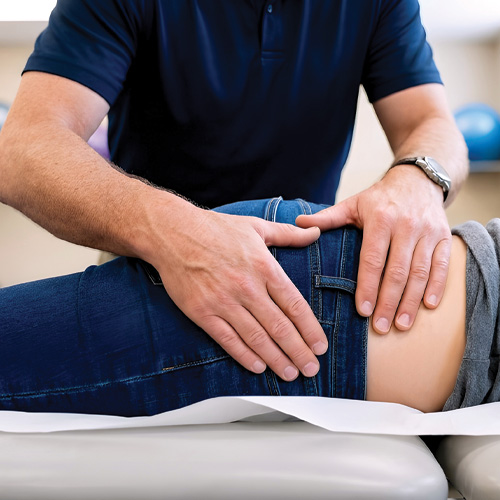
Exercise of the Month
CLAMSHELLS (EXERCISE BAND)
Lie on your side with your knees bent and feet together. Position an exercise band above your knees. The side you want to exercise should be on top. While keeping your feet together, lift your top knee away from your bottom knee. Slowly return to the starting position. (Materials needed: exercise band)
3 Sets, 10 Reps.
Ready to Move More Comfortably? Let’s Get Started
Hip pain can be frustrating, but it doesn’t have to define what you can or can’t do. With a thoughtful, individualized approach, many of our patients can make meaningful progress and regain control of their movement.
And remember: if hip pain is starting to interfere with your daily activities, you don’t have to navigate it on your own. The team at Prairie Rehabilitation is here to help you better understand what’s going on and create a plan that fits your needs.
Schedule an appointment with us today for an initial evaluation.

The entire staff is wonderful! From the happy greetings when you walk in the door to thanking you on your final visit. They ask the right questions to keep you comfortable and safe during rehabilitation.